Nuclear: The CPN reaffirms its key role in reindustrialization

Reindustrialization remains an absolute priority for France. In October 2021, the Head of State launched the France 2030 plan to catch up with the country's industrial lag. However, the latest Industry Barometer, published on March 13, 2025, shows a slowdown: 89 factory openings and extensions in 2024, compared to 176 in 2022 and 189 in 2023. This slowdown varies by region: Auvergne-Rhône-Alpes and Nouvelle-Aquitaine record 32 and 24 openings respectively, while Nord-Pas-de-Calais and Grand Est have a negative balance.1
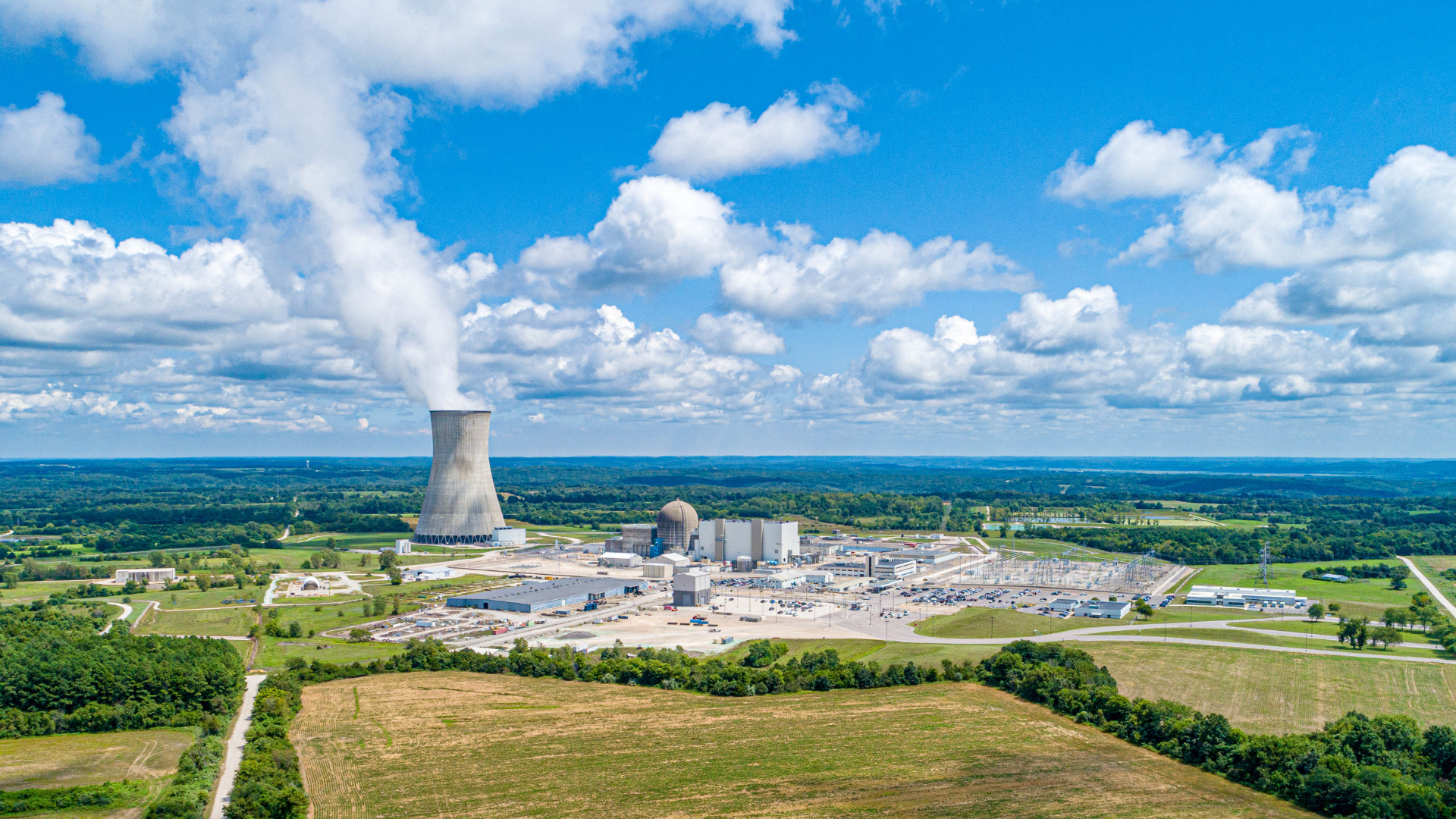
Why is nuclear so strategic in France?
At the heart of the reindustrialization strategy, the nuclear sector occupies a central place. The leading source of electricity production and consumption in France, it relies on a fleet of 57 reactors of varying powers. This industry alone represents 6.7% of French industrial employment, with 220,000 employees and 3,200 companies, ranging from VSEs to large SMEs, specialized in essential trades such as maintenance, boilermaking or sanitation. One of the objectives of France 2030 is to promote the emergence of small modular reactors (SMR) by 2035 and to support breakthrough innovations in the sector.
Today, nuclear remains the energy emitting the least CO2 per kWh produced, making it an essential ally of the energy transition. A study by the Molinari Economic Institute, published in February 2025, highlights this impact: "For nearly half a century, the replacement of fossil fuels by nuclear has avoided the emission of the equivalent of about 28 years of France's total CO2 emissions in 2023, for the greatest benefit of the climate."
In a long-term perspective, the gradual abandonment of fossil fuels in favor of carbon-free electricity will inevitably involve nuclear power. But to meet this growing demand, the sector must strengthen itself and recruit massively. Sébastien Martin, president of Grand Chalon, recalls: "Relaunching nuclear power is not just building EPRs. It is also structuring industrial and human ecosystems around these projects, mobilizing the know-how and skills present in our territories." The State, EDF, contractors and territories must therefore coordinate their efforts to accelerate this recovery.
It is with this in mind that decree n°2008-378 established the Nuclear Policy Council (CPN), chaired by the President of the Republic.
The Nuclear Policy Council (CPN)
To pilot this relaunch and guarantee a coherent strategy at the national level, nuclear governance relies on a key body: the CPN.
It brings together strategic actors, including:
- The Prime Minister
- The Minister responsible for Energy
- The Minister of Foreign Affairs
- The Minister of the Economy
- The Minister of Industry
- The Minister of Foreign Trade
- The Minister of Research
- The Minister of Defense
- The Minister of the Budget
- The Chief of the Defense Staff
- The Secretary General for Defense and National Security
- The General Administrator of the Atomic Energy Commission
Other members of the government, senior civil or military officials, as well as representatives of the main institutions of the sector (ASN, CEA, EDF, Orano, Framatome, Andra) may be invited depending on the subjects discussed.
Its mission: to define and guarantee the application of the main orientations of French nuclear policy.
During the meeting on March 17, 2025, the President of the Republic gathered the CPN to take stock of the progress of the ERP2 program, which provides for the construction of six generation 3 reactors at Penly, Gravelines and Bugey, with commissioning by 2038.2
The CPN thus validated several major decisions:
- The continuation of the ERP2 program, notably with the "downstream of the future" project led by Orano on the La Hague site, concerning the storage of spent fuel in a new pool.
- The integration of this relaunch into the Multiannual Energy Programming (PPE3), which sets the main orientations of the energy transition alongside the National Low Carbon Strategy (SNBC).3
- The establishment of a subsidized state loan to cover part of the construction costs.
- The invitation to EDF to present, by the end of 2025, a binding costed proposal on the costs and deadlines of the program.
- The reminder that EDF's final investment decision will be taken in 2026.
This rigorous structuring allows France to secure its energy independence and preserve its industrial mastery in the nuclear field.
A sector to modernize to gain efficiency
The nuclear sector relies on demanding standards and absolute safety imperatives. However, certain internal processes must evolve to meet current challenges.
One of the major challenges is to accelerate production while modernizing practices. Too many companies still operate with obsolete processes, using paper solutions that are difficult to trace. This inertia hinders competitiveness against giants like the United States and China.
The example of the 12-year delay of the Flamanville EPR illustrates these flaws well. In 2008, the Nuclear Safety Authority (ASN) stopped work due to non-conformities and demanded that EDF strengthen its internal controls, regardless of the rank of service providers. Rigorous traceability of information is therefore essential, from data collection in the field to facility maintenance.
Operating as an extended enterprise in the nuclear sector (see article Digital technology at the center of the extended enterprise) imposes optimal coordination. Solutions like olome Connected Industry© allow effective management of subcontractors and secure information transmission thanks to agile management of authorizations and clearances. They also guarantee digital continuity and precise tracking of equipment life cycles.
Another strategic issue: skills management of employees in the nuclear sector. Faced with the urgency of recruitment, it is essential to ensure the qualification and authorization of workers. Tools like olome People - HR facilitate the constitution of teams according to operational constraints, thus optimizing human resources management and identification of training needs.
Continuous improvement is essential to strengthen the competitiveness of the sector. By modernizing processes and breaking certain inefficient habits, France gives itself the means to increase its efficiency and perpetuate its leadership in nuclear power.
Conclusion
The nuclear sector is more than ever a strategic issue for French industry, combining energy sovereignty, competitiveness and ecological transition. Its relaunch relies on a controlled ramp-up, requiring effective coordination between the State, industrialists and territories. The acceleration of the nuclear program cannot be done without a solid structuring of the sector, modernization of processes and optimized skills management.
If the urgency is first to ensure the success of this relaunch, it is also essential to anticipate the next steps. The rise of nuclear power raises questions about the optimization of this electricity production in the long term. It will be a question not only of guaranteeing effective deployment, but also of preparing future uses to maximize the benefits of this energy on the national territory.